Human-centered evaluation experience
Role
UX Writer and researcher
Connect design and analytics teams to create a cohesive product user journey
Objective
Transform the marketplace into a personalized journey
01
Intentional
Structure
02
Collaborative
Energy
03
Expert
Facilitation
Personalization Quiz Experience
The opportunity
Prior to this initiative, the marketplace offered a generalized user experience, requiring users to manually navigate plan options. This approach missed critical opportunities to deliver targeted, high-impact messaging to diverse audience segments.
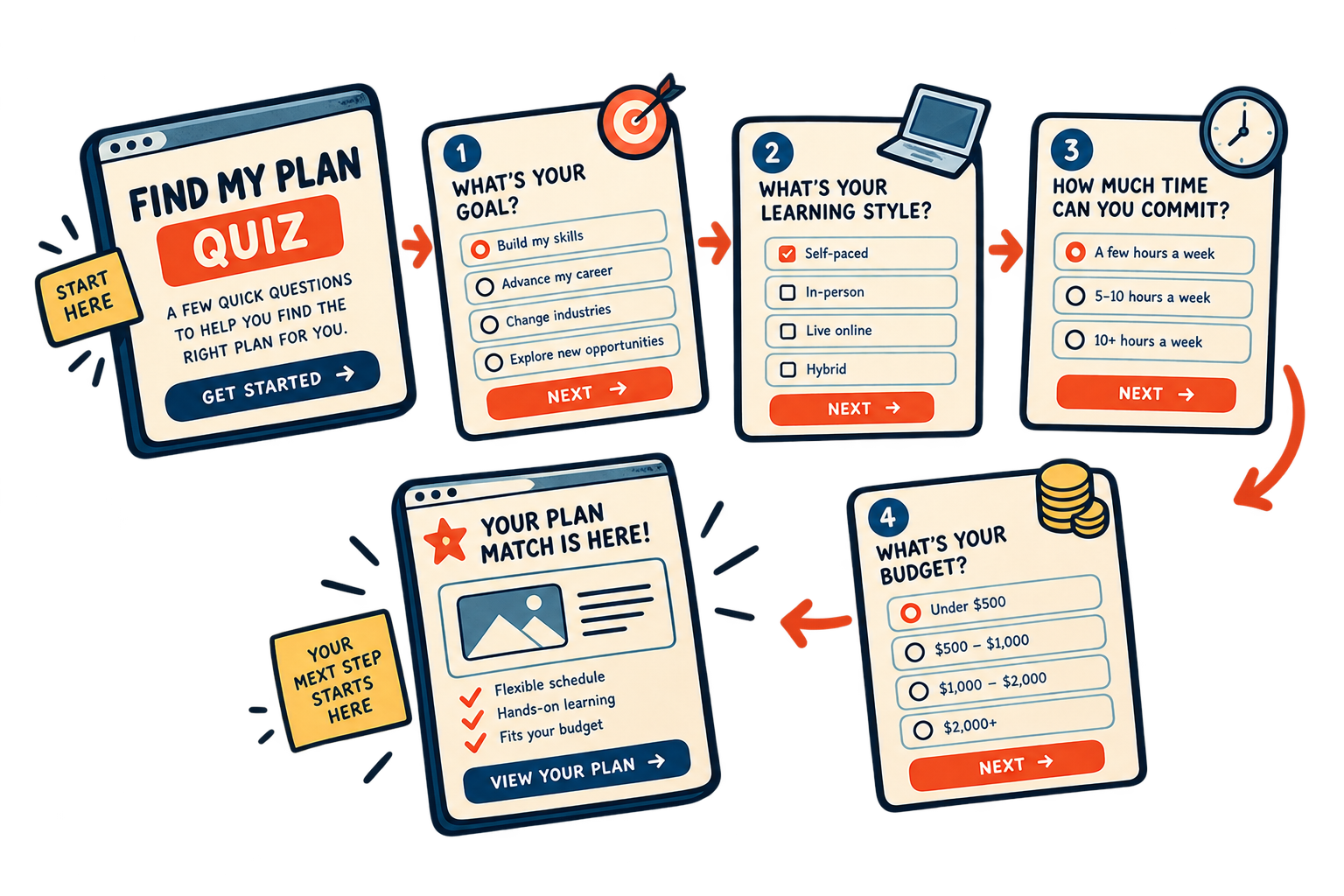
Our objective was to transform the marketplace into a personalized journey. By implementing a guided quiz powered by a recommendation engine, we aimed to provide users with three tailored plan options, each accompanied by detailed insights into how they met their specific needs.
As the UX writer and researcher, I collaborated with design and analytics teams to validate the hypothesis that a personalized entry point would drive higher engagement. The redesign successfully increased site visits by 10% and conversion rates by 15%
Increased site visits by 10%
Increased conversion rates by 15%
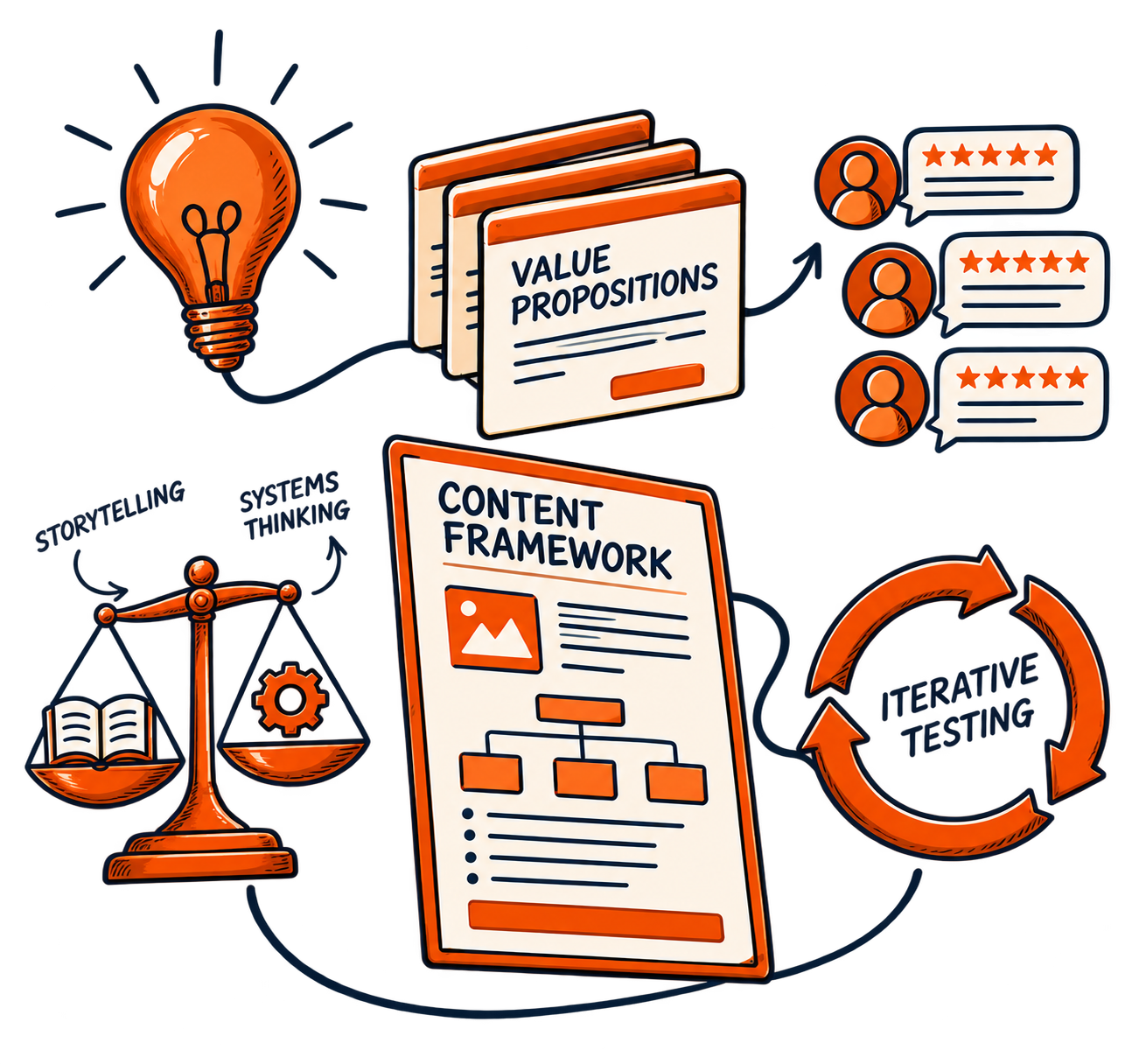
I served as one of the lead UX writers and researchers, partnering with product designers, analysts, and the client brand team to define the narrative structure for the quiz and recommendation pages.
My responsibilities included developing scalable value propositions and testing them through direct user feedback. I focused on creating a flexible content framework that balanced storytelling with systems thinking, ensuring the experience could evolve through future iterative testing.
My Role
The project began with comprehensive research, including stakeholder interviews and an analysis of existing performance data. I worked in lockstep with the design team to ensure every stage of the redesign was informed by user needs.
I developed detailed content outlines to guide the hierarchy of each page, focusing on:
Methods & Approach
Thematic "stories" aligned with user interests and intents
Tiered messaging strategies for primary and secondary objectives
Information sequencing designed to reduce friction and maintain momentum
Collaborative wireframing in Figma to align copy with visual flow
Tools & Collaboration
Methods: Content audits, message mapping, accessibility audits, and dynamic testing
Collaboration: Cross-functional partnership with Product Design and Analytics
Tools: Figma, proprietary testing platforms
Results & Reflection
The iterative redesign significantly boosted user comprehension and conversion. Beyond the metrics, this project demonstrated that UX writing is essential for bridging the gap between complex systems and empathetic, clear user experiences.